The Bible in the Language of the Heart: A Milestone for Morocco
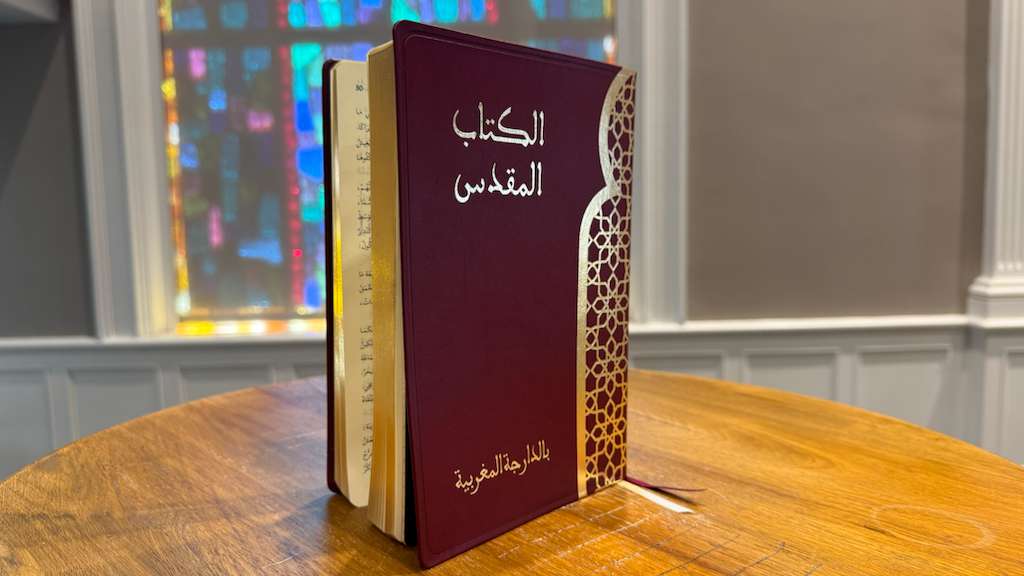
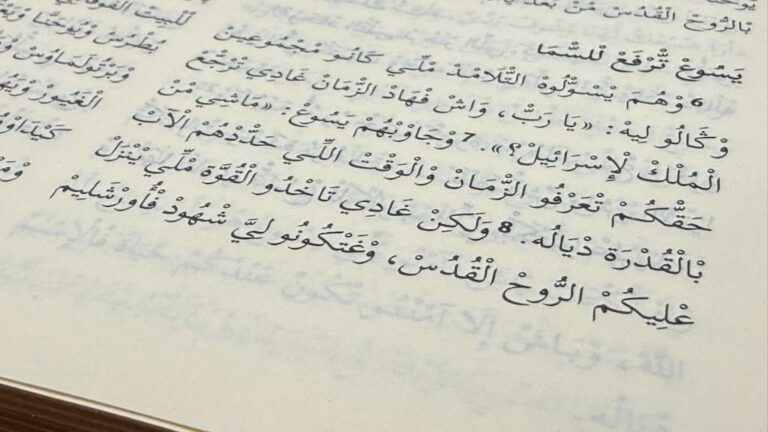
This week, a member of the FTT team had the privilege of interviewing a missionary who had just returned from Morocco. He had attended a quiet but historic celebration—the publication of the Bible in Moroccan Arabic.
For security reasons, the names of those involved cannot be shared. In parts of North Africa, following Jesus still carries real risk. Yet behind the scenes, over decades of faithful labor, prayer, and perseverance, God has been at work bringing his Word to people in the language they speak at home—the language of their hearts.
A Long Road to Clarity
The story of the Moroccan Arabic Bible did not begin overnight.
Formal work on this translation began in 1997, but its roots stretch back nearly a century. In 1932, a New Testament was produced primarily by foreign translators working from the King James Version. It was a courageous effort for its time. But it had serious limitations:
- There was little to no national involvement.
- Archaic English idioms were translated too literally.
- Some phrases simply did not make sense in everyday Moroccan speech.
Even skilled readers often struggled to understand it.
In the 1950s and 1960s, another attempt was made, resulting in a 1963 publication that blended Moroccan, Algerian, and Tunisian forms of Arabic. While helpful, it still did not reflect the distinct rhythm, vocabulary, and expression of Moroccan Arabic as spoken in homes, markets, and neighborhoods.
And that matters.
Because language is not just about comprehension—it is about connection.
The Language of the Heart
Across the Arabic-speaking world, Modern Standard Arabic is used in formal settings—education, news, official communication. But in daily life, people speak local dialects. In Morocco, that dialect is Darija—Moroccan Arabic.
For many Moroccans, religious texts in classical Arabic can feel distant or formal. A translation in Darija brings Scripture into everyday speech—the language of family conversations, jokes, and prayers whispered in private.
As one translation advocate put it, people need to hear God speak in the language of their heart.
When Scripture sounds like your grandmother’s voice, your childhood memories, your own internal thoughts—it moves from being a foreign book to a personal message.
National Partnership and Ownership
Unlike earlier efforts, the recent Moroccan Arabic Bible involved significant national participation. Local believers and linguists contributed to the work, helping ensure that the translation was accurate, natural, and faithful to both the original text and the living language of the people.
This shift—from foreign-driven translation to national partnership—is critical. It reflects a broader global movement: the Church in every nation is rising up, taking responsibility for reaching its own people and neighboring cultures.
It also reflects something deeper—dignity. When believers participate in translating Scripture into their own language, it affirms that God sees, values, and speaks to them in their culture.
Why This Matters for 2033
At Finishing the Task, one of our five B goals for 2033 is:
Bibles in every heart language.
We believe that by the 2,000-year anniversary of the Great Commission, every person on earth should have access to Scripture in a language they truly understand.
The five B goals include:
- Bibles in every heart language
- Believers sharing the gospel everywhere
- Bodies of Christ in every community
- Breakthrough Prayer for every nonbeliever
- Bridges of love as practical expressions of God’s love to every heart
The Moroccan Arabic Bible is a living example of what “Bibles in every heart language” looks like in action.
This is not just about printing books. It is about:
- Mothers reading Scripture to their children in words they use every day.
- Seekers encountering Jesus in language that feels personal and clear.
- House churches studying the Bible without linguistic barriers.
- A new generation hearing the gospel without translation filters in their minds.
Still Dangerous. Still Worth It.
The celebration in Morocco was quiet. It had to be.
There are still risks for those who follow Jesus openly. That reality should move us—not toward fear, but toward prayer.
Because every completed translation represents years of unseen faithfulness:
- Linguists wrestling over the right word for “grace.”
- Believers praying for clarity and courage.
- Teams working carefully to ensure theological accuracy and cultural resonance.
Many of these workers will never be publicly honored. But heaven records their names.
You Can Be a Part of the Global Story
The Moroccan Arabic Bible is one milestone in a much larger story.
Thousands of language communities around the world are still waiting for Scripture in their heart language. Some have partial translations. Others have none. Each represents real people—families, villages, entire cultures—who deserve to hear the good news in words they can fully grasp.
As we move toward 2033, we invite you to:
- Pray for ongoing Bible translation efforts in unreached and restricted nations. Check out https://prayforzero.com/ for ways you can pray for Bible translation.
- Support organizations and teams committed to linguistic and theological excellence. https://illuminations.bible/ offers a simple way to get started.
- Share the vision of Bibles in every heart language with your church and network.
The Great Commission is not abstract. It is deeply personal. It is about names, faces, and languages. We celebrate that in Morocco today there are people opening God’s Word and hearing him speak—not in a distant dialect, not in a foreign register—but in the language of their heart.